Your directory of evidence based inclusion strategies
The directory. Universal expectations for inclusion and the four Areas of need in depth.
In this guide
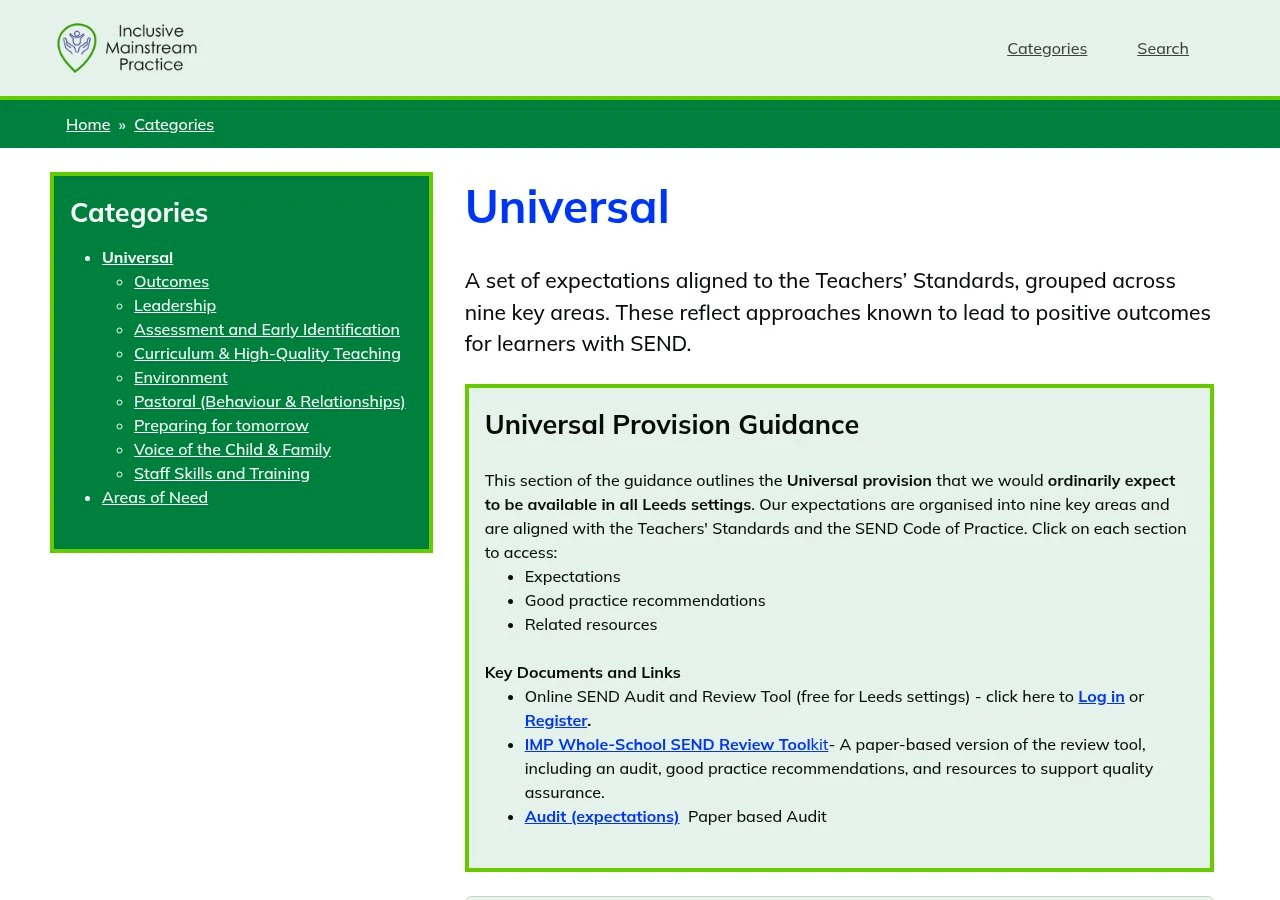
Nine universal areas
Every one aligned to the Teachers' Standards. Leeds chose these nine.
- outcomes
- leadership
- assessment and early identification
- curriculum and high quality teaching
- environment
- pastoral, behaviour and relationships
- preparing for tomorrow
- voice of the child and family
- staff skills and training
Yours will be your own, from your ordinarily available provision docs.
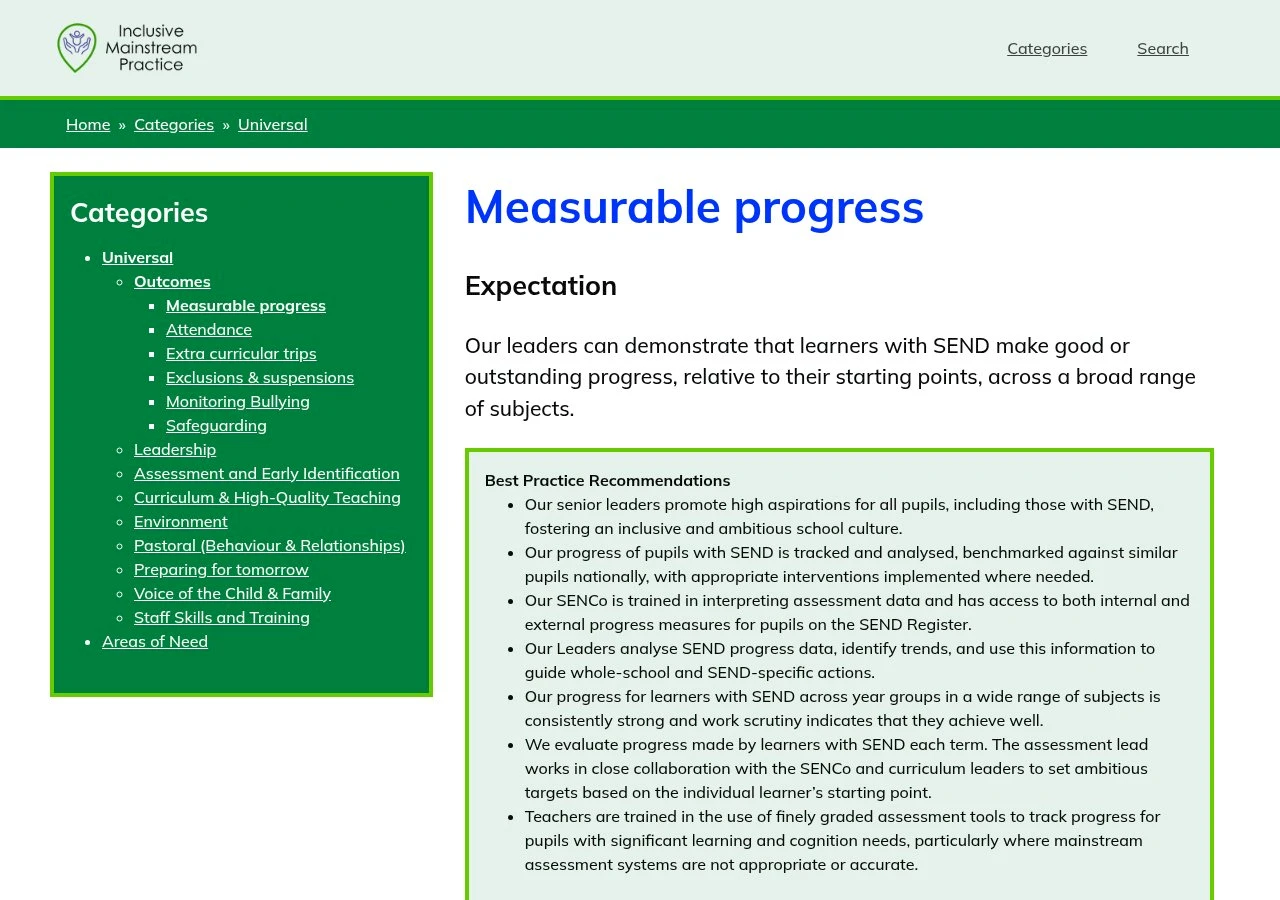
An expectation on every page
Each page starts with one main expectation, in your words. "Our leaders can demonstrate that learners with SEND make good or outstanding progress, relative to their starting points."
Under it sit the best practice recommendations your specialist teams wrote. Under those sit the resources they chose, each marked free or paid and by stage.
In Leeds that is over 750 resources, and growing. A website can be updated with this week's evidence. A PDF is out of date as soon as it's printed.
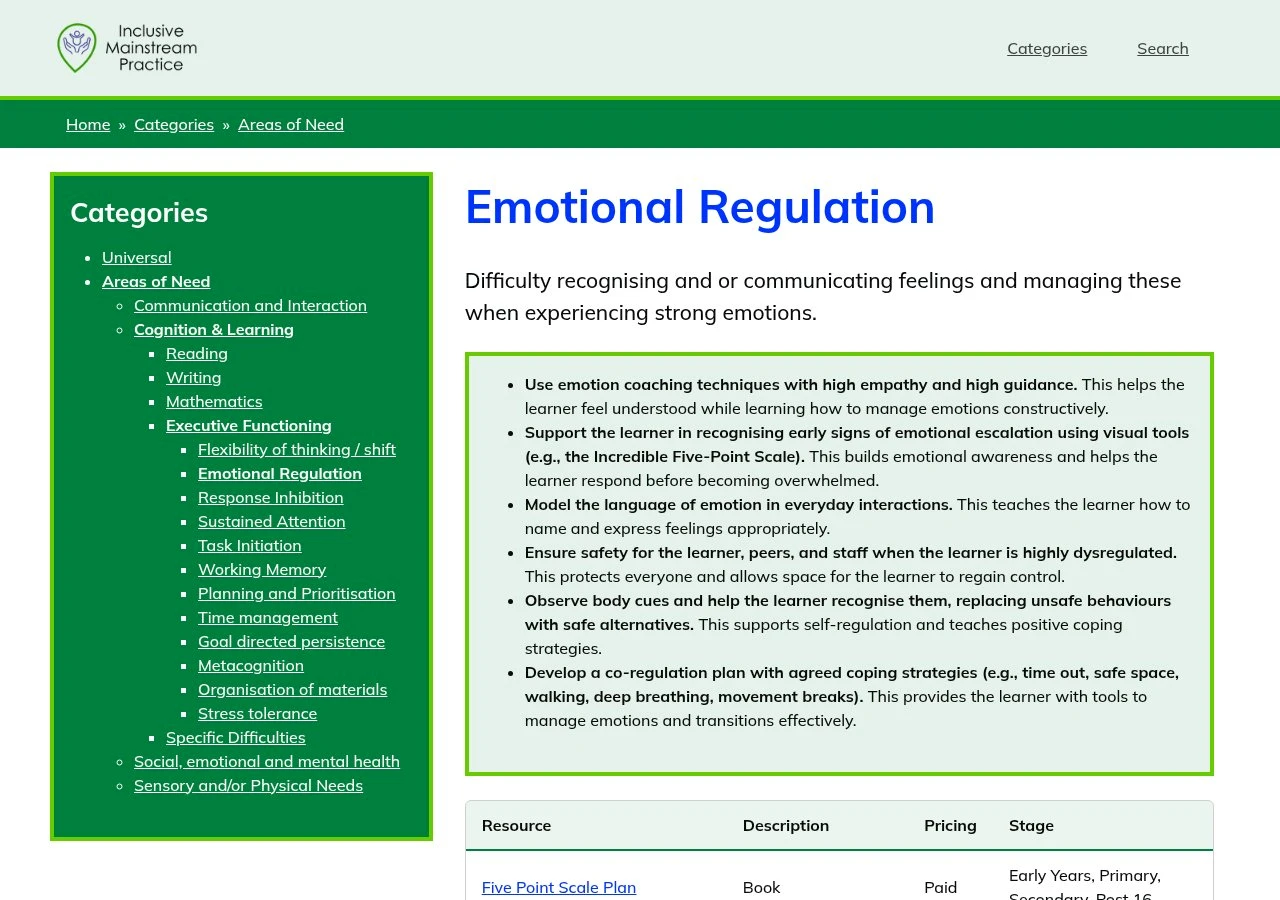
The four areas of need, in depth
Under communication and interaction in Leeds sit speech, language and communication, and social communication differences including autism. Under cognition and learning sit reading, writing, maths and executive functioning.
Each is a page of expectations to try, with the tested interventions beside them.
Strategies that work
A SENCO will discuss with a teacher the most appropriate strategy to support thier learners.
Ready to talk? Send us your documents, get a demo back