I like, I wish, What if...?
A simple guide to gathering views in SEND services
What is this method?
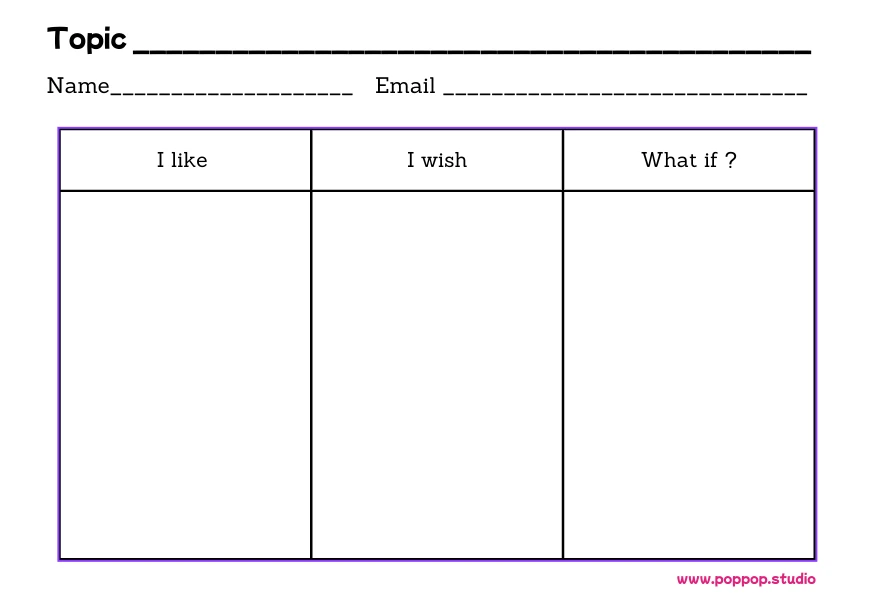
"I like, I wish, What if?" is a friendly, structured way to gather feedback and ideas. It breaks down thoughts into three simple categories that help people express their experiences and hopes for the future.
- I like: what's working well right now
- I wish: what could be better
- What if: creative ideas for the future
Why use this method?
- Simple to understand
- Works for different communication styles
- Can be adapted for different ages and needs
- Balances positive feedback with suggestions
- Encourages creative thinking
- Can be done individually or in groups
When to use it
This method works well for
- Service evaluations
- School transport reviews
- Short breaks service design
- Education, health and care plan processes
- Transition planning
- Healthcare pathway reviews
- Leisure activity planning
- Support group development
- Parent carer forum consultations
- Local Offer website improvements
Running a session
What you'll need
- Large paper or boards for each category
- Sticky notes (different colours for each category)
- A printed template as an alternative
- Marker pens
- Visual supports
- Communication aids as needed
- Fidget toys and comfort items
- A quiet space option
Session structure
1. Setting up (15 minutes)
- Create a comfortable, accessible space
- Display clear visual labels
- Set up a quiet area
- Prepare communication supports
- Arrange materials within reach
2. Introduction (10 minutes)
- Explain each category using examples
- Show how to share ideas
- Set ground rules together
- Explain how feedback will be used
- Answer questions
3. Gathering views (30 to 45 minutes)
For each category
- Allow thinking time
- Offer writing, drawing or typing options
- Support with scribing if needed
- Use prompt questions
- Take regular breaks
4. Sharing ideas (20 minutes)
- Optional sharing of thoughts
- Group similar ideas
- Celebrate contributions
- Plan next steps
- Explain what happens next
Making it accessible
For young people
- Use symbols or pictures
- Offer drawing options
- Include movement breaks
- Use special interests
- Keep sessions short
- Provide choices for sharing
For parent carers
- Offer flexible timing
- Provide childcare if possible
- Give pre-session information
- Allow online contributions
- Offer 1:1 options
- Follow up opportunities
Example questions for different topics
Transport review
I like
- "Which parts of your journey work well?"
- "Who helps make your journey better?"
- "What makes you feel safe?"
I wish
- "What would make your journey easier?"
- "What would help at pick-up times?"
- "What would make you more comfortable?"
What if
- "What if you could design the perfect transport?"
- "What if you could change one thing?"
- "What if you could help other children feel better about transport?"
Short breaks service
I like
- "What activities do you enjoy most?"
- "Who makes your breaks fun?"
- "What's the best part of your break?"
I wish
- "What other activities would you like?"
- "What would make breaks better?"
- "What would help your family more?"
What if
- "What if you could create a new activity?"
- "What if you could go anywhere?"
- "What if you could help plan activities?"
Education support
I like
- "What helps you learn best?"
- "Who supports you well?"
- "What makes a good day at school?"
I wish
- "What would help you learn better?"
- "What would make school easier?"
- "What support would help more?"
What if
- "What if you could design your perfect classroom?"
- "What if you could teach others about your needs?"
- "What if you could change anything about school?"
Recording and using feedback
During the session
- Take photos of boards (with permission)
- Note key themes
- Record quotes (anonymously)
- Capture nonverbal feedback
- Note urgent issues
After the session
- Create an accessible summary
- Share findings appropriately
- Show how views influence changes
- Plan follow-up sessions
- Celebrate impacts
Success tips
- Always offer multiple ways to contribute
- Value all forms of communication
- Allow plenty of time
- Keep it positive and solution-focused
- Show how feedback makes a difference
- Make it fun and engaging
- Be flexible and responsive
- Follow up and keep participants informed
Remember, every voice matters in making services better for everyone.
These are the activities we run when we rebuild a local offer
Every Placid site is built with parent carers and young people in sessions like these, and Belong is built the same way with SENCOs. If you would rather not run them yourself, we can come and run them for you, gather fresh data for a section of your local offer, or refresh a section that has gone stale.
See how Placid is built →Talk to Jonny about running these with you →